

See you in 2027!
The display of 500,000 tulips has come to an end for 2026, but don’t worry: the gardens have plenty of lovely floral surprises in store for you.
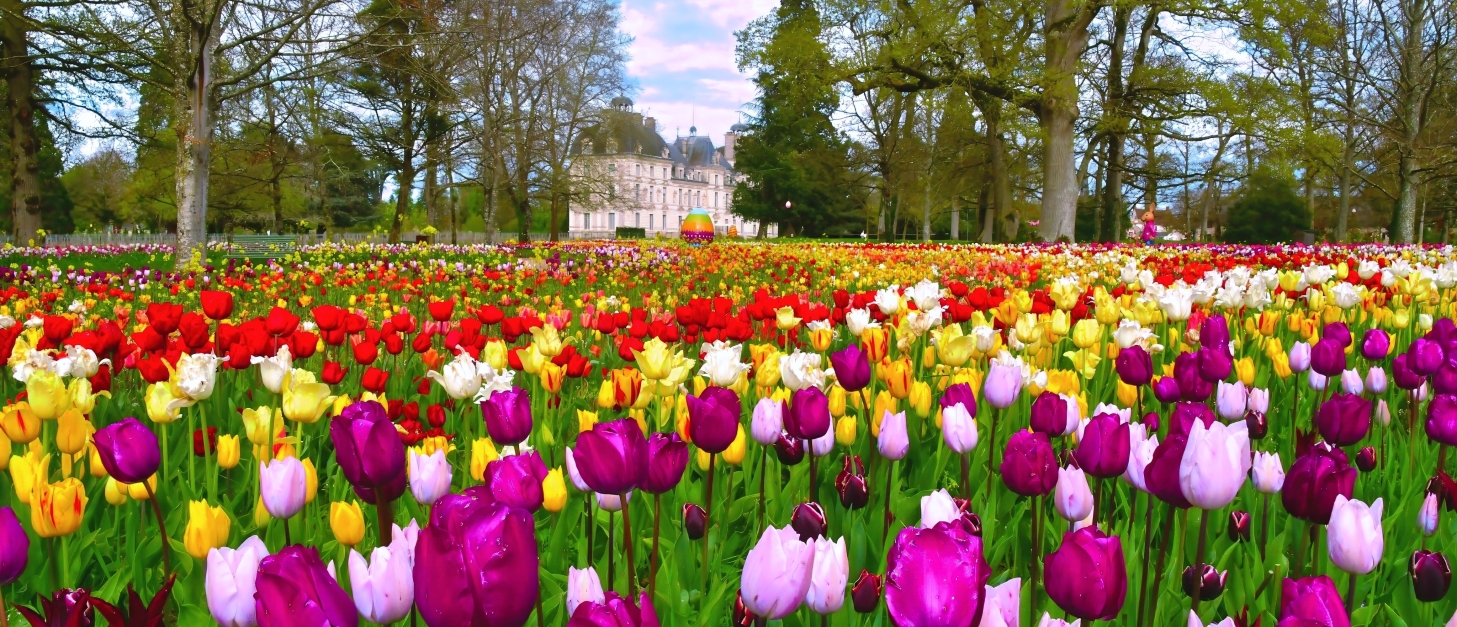
Every spring for the past eleven years, tulips have reigned supreme in three of the gardens at the Château de Cheverny.
This year, over 500,000 bulbs were planted in the autumn, forming not one, but two huge ribbons of tulips. A guaranteed wonder!
Imagine this spectacular ribbon: 500,000 tulips on two ribbons, each 250 metres long and 12 metres wide... A palette of reds, pinks, yellows, oranges, mauves and whites. A true work of natural art, ending in the park's water feature.
This magnificent show is not to be missed! Come and visite now!
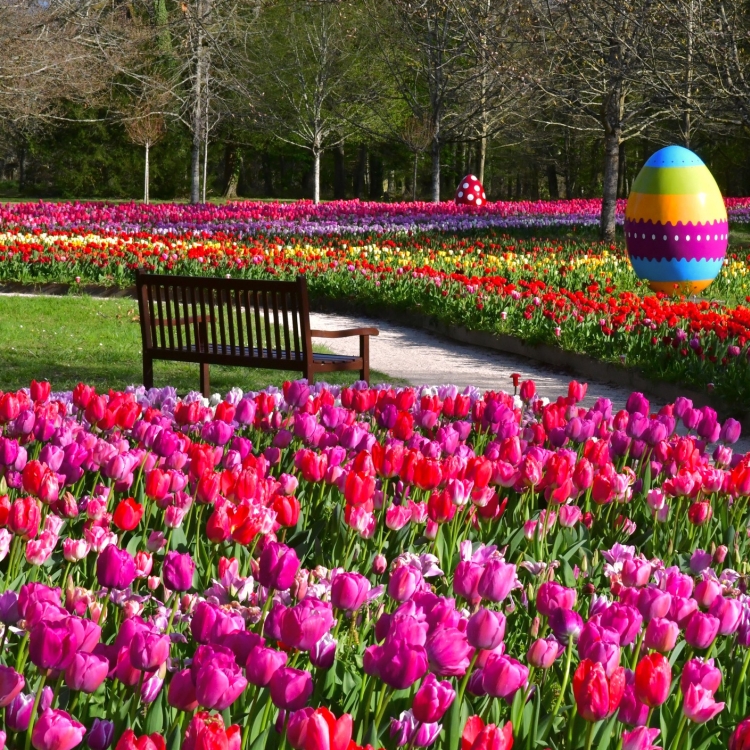
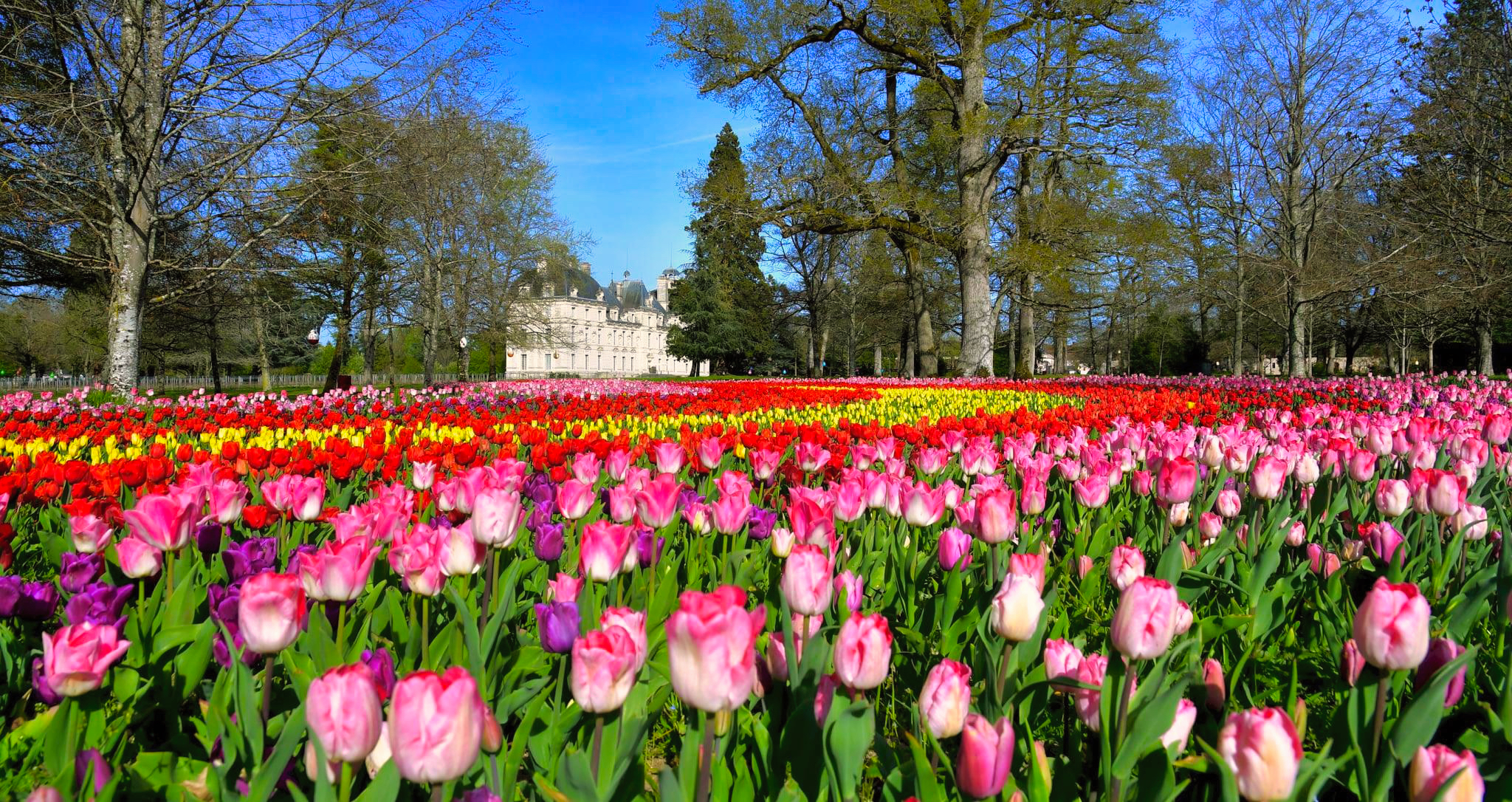
The tulip ribbon in figures:
2014: creation of the tulip ribbon with 100,000 bulbs planted
2015: ribbon of 120,000 bulbs
2019: ribbon of 150,000 bulbs
2020: ribbon of 200,000 bulbs
2022: ribbon of 250,000 bulbs
Since 2023: two ribbons of 500,000 bulbs intertwine
Tulip variety: Triumph Every year in autumn, 50 to 60% of the flowerbed is renewed after the soil has been enriched.
Seven gardeners work year-round to create this natural spectacle.
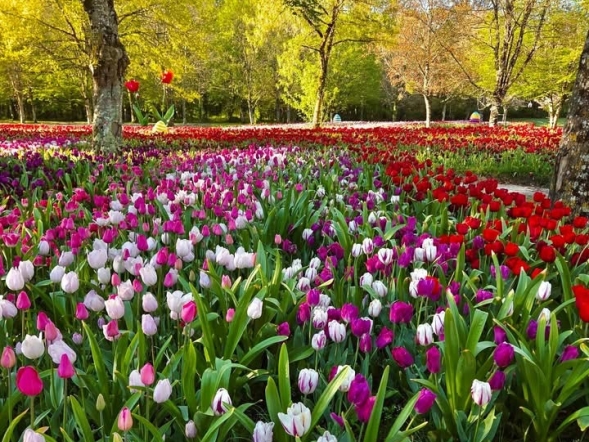
Follow the evolution of the tulip ribbon in 2026.
📸 Here are the photos as of 8 April, 2026.
You can also find all the photos of the evolution of the ribbon, thanks to this album updated regularly on Facebook:
Follow the ribbon's progress on our social media channels:
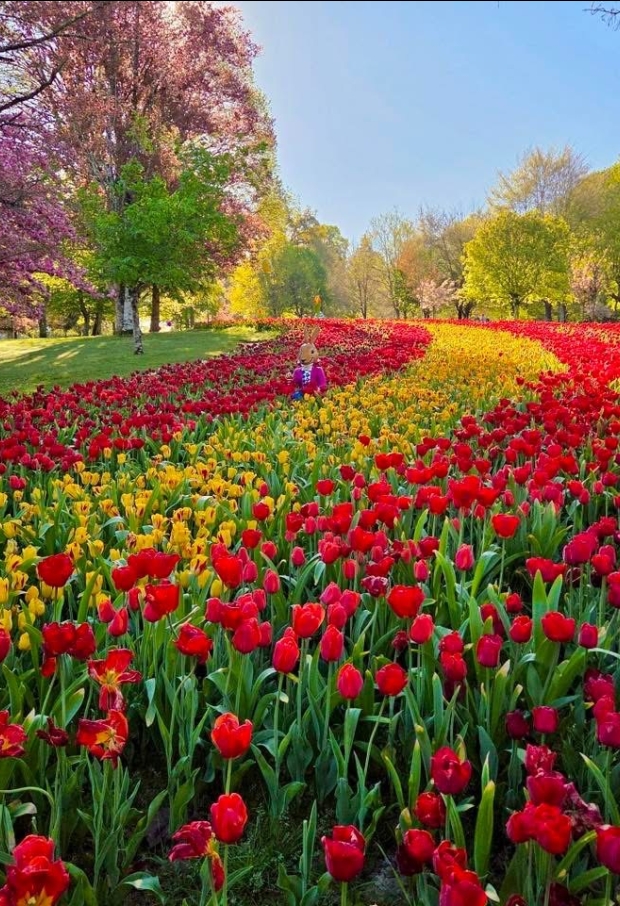
Triumph tulips
There are over a hundred species of tulips and thousands of horticultural varieties. The number of crosses and creations has led growers to organise tulips into 15 groups, according to their characteristics, including shape and flowering period.
For example, tulips in the 'Triomphe' group originally came from a cross between early and late single tulips, and are known for flowering early in the season.
This group is the largest; the tulips in this group also come in a wide variety of colours. They can be used both in flowerbeds and in bouquets, as their stems are particularly sturdy.

The "Château de Cheverny" tulip
On 7 April 2022, the tulip known as "Château de Cheverny" was named by Chantal Goya and Louise Jacqueline. It is a Triumph type tulip of Dutch origin. The result of a cross between single-flowered and late-flowering tulips, it was selected by producer Jan Ligthart and is currently available in a very limited edition.
This is a fast-flowering, early-blooming tulip that thrives in the garden. It is robust and bright thanks to its contrasting colours, combining bright pink and white. This colour combination is difficult to reproduce and gives this tulip a completely unique appearance.
Its shape is similar to a Darwin hybrid in terms of flower size and early flowering. The flower is conical and becomes oval after opening, and its stem is sturdy.
The tulip known as Château de Cheverny is descended from, among others, the famous 'Strong Gold' variety which, as its name suggests, is known for its strength and robustness.
The history of the tulip
It all began in 1536, when Francis I signed the Franco-Ottoman Alliance with Suleiman the Magnificent, the tenth sultan of the Ottoman Empire. Through this alliance, France secured a powerful ally against the Habsburgs, but also developed its trade with the eastern Mediterranean. The alliance lasted until the Egyptian campaign (1798-1801).
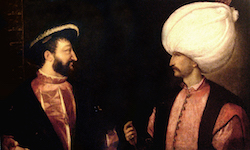
Thus, in 1546, Pierre Belon, one of the earliest French naturalists, accompanied Francis I's emissaries to Suleiman and discovered his gardens, where he marvelled at the beauty of tulips, plants unknown in Europe at the time. He described this flower in minute detail in his writings, and it soon turned the heads of the Netherlands, and to a lesser extent England and France.
Did you know? The word "tulip" comes from the Turkish "tülbend" and the Persian "tulipan". The flower was given this name because of its resemblance to a turban!
La tulipomanie
The first bulbs were purchased from Suleiman the Magnificent by Ogier Ghislain de Busbecq, Ferdinand I's ambassador to the Ottoman Empire, and bloomed in the imperial gardens in Vienna around 1570.
Charles de L'Ecluse was then intendant of the imperial gardens and it was probably he who introduced tulips to the United Provinces (Netherlands) at the end of the 16th century, when he was appointed professor of botany at the University of Leiden.
In the 1620s and 1630s, a real passion for tulips emerged, particularly those with stripes (Semper Augustus), causing prices to double year on year: at the height of the craze, a tulip could be worth the price of a house!
In 1637, a royal decree put an end to this veritable speculative bubble.
Did you know? Unlike today, the striped tulips of the time were not the result of selection or crossbreeding, but were affected by a disease!
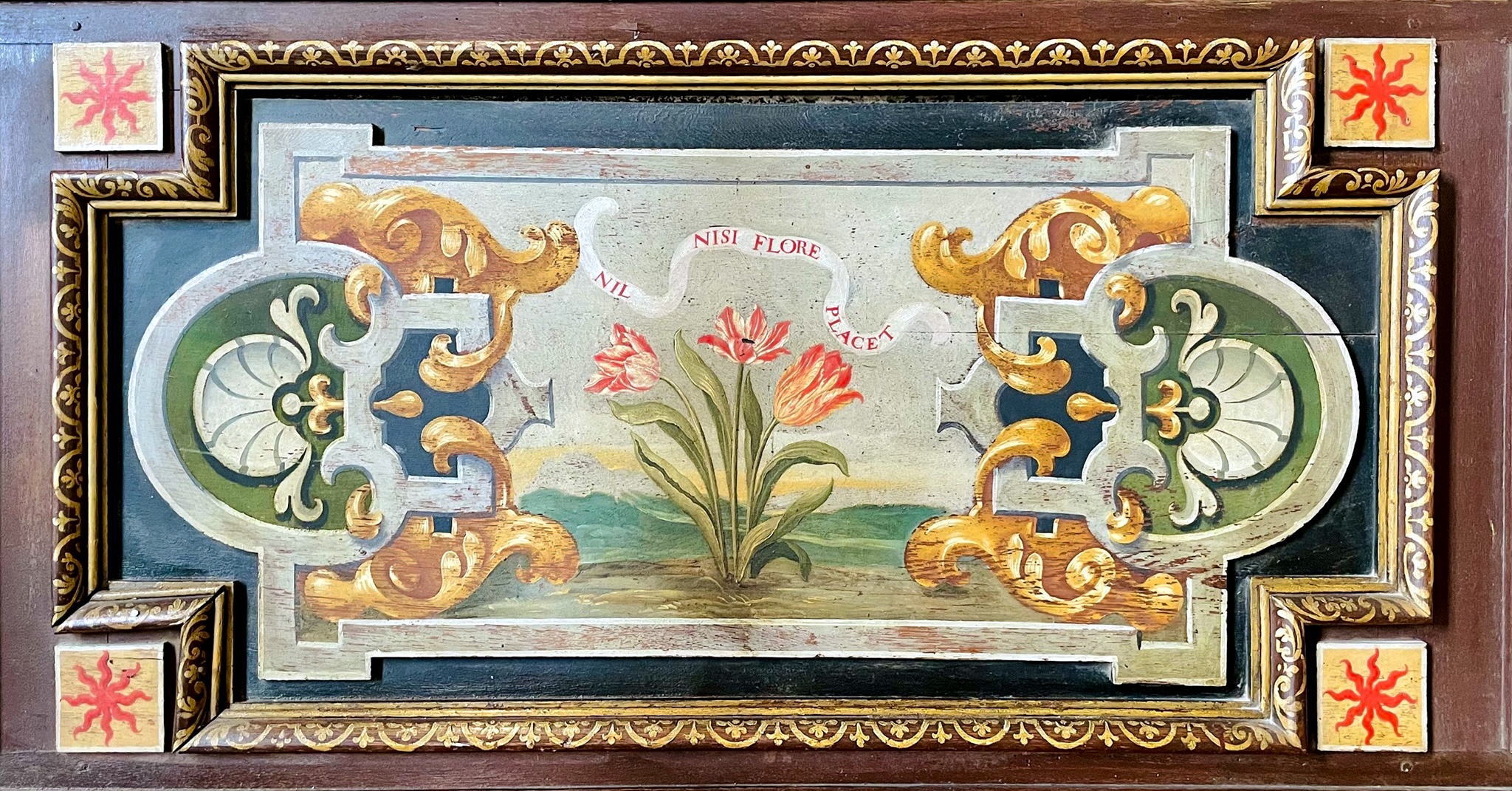
In the armoury of Cheverny Castle, there is a reference to tulip mania on one of the panelled walls.
The motto: "Nil nisi flore placet" means "Nothing pleases me except this flower".